Results That Protect Your Business — Not Just Your Drivers
Fleet safety isn’t about completing a course. It’s about reducing incidents, reducing liability, and strengthening documentation.
Safety Training Without Measurable Impact Is Just Expense.
According to the National Safety Council, motor vehicle crashes cost employers billions annually in direct and indirect losses.
According to the National Highway Traffic Safety Administration, human error contributes to the vast majority of crashes.
The question is not whether crashes happen.
The question is whether your fleet is actively reducing preventable risk.
What We Help Businesses Improve
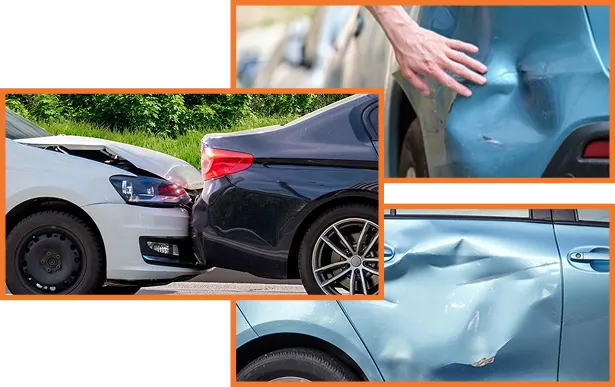
- Reduced preventable rear-end collisions
- Improved following-distance discipline
- Reduced intersection-risk exposure
- Fewer repeat incidents involving the same driver
- Strengthened safety documentation
- Increased driver awareness under congestion
Most “minor” fleet accidents follow patterns.
We identify and correct those patterns.
The Most Common Fleet Incidents in Central Florida
Based on statewide crash reporting through the Florida Highway Safety and Motor Vehicles:
- Rear-end collisions
- Intersection impact crashes
- Improper lane change collisions
- Failure-to-yield incidents
- Construction-zone contact
These are rarely catastrophic — at first. But they are costly. Our training directly addresses these high-frequency crash types.
How Structured Fleet Safety Changes Outcomes
Example 1 — HVAC Fleet (10 Vehicles)
Repeated minor rear-end incidents in residential areas.
On-road hazard anticipation training + following-distance discipline program.
Improved driver spacing habits and reduced repeat preventable contact.
Example 2 — Delivery Fleet (18 Vehicles)
Time-pressure driving behaviors in downtown Orlando congestion.
Urban defensive driving retraining + distraction awareness.
Improved lane discipline and reduced near-miss reports.
Example 3 — Construction Fleet (12 Vehicles)
Interstate merging issues on I-4 and SR 408.
High-speed merging strategy coaching + blind spot discipline.
Increased driver confidence and reduced risk exposure during peak congestion.
Why Documentation Matters
After an accident, investigators and insurers examine:
- Driver history
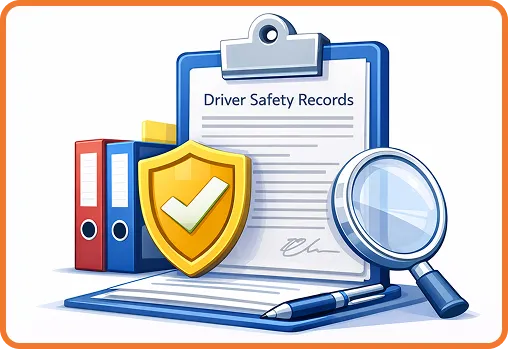
- Safety training records
- Evaluation documentation
- Employer due diligence
Documented fleet training demonstrates proactive risk management.
This protects:
- Your insurance positioning
- Your legal exposure
- Your company reputation
Documented fleet training demonstrates proactive risk management.
The Cost Comparison Is Clear
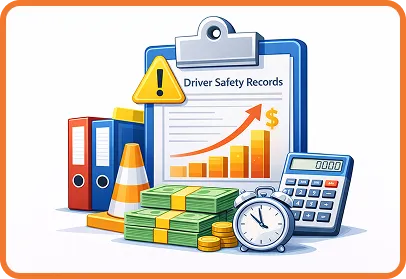
Average employer cost of a crash injury: $70,000+ (Industry safety data)
Indirect costs often include:
- Lost productivity
- Vehicle downtime
- Insurance premium increases
- Administrative time
- Brand impact
Even a “minor” accident can escalate total loss far beyond repair costs. Structured safety training reduces exposure probability.
Beyond Accidents — Safety Culture Strength
- They are evaluated
- They are coached
- Their performance is documented
- Safety is prioritized
Behavior changes.
Safety culture becomes visible.
Accountability improves.
This reduces long-term exposure.
Accident Reduction Is Not Luck
- It is structure.
- It is awareness.
- It is repetition.
- It is documentation.
Orlando’s traffic environment is not getting lighter.
Proactive fleets outperform reactive fleets.
Terms & Conditions
- All lesson invoices are payable in advance or within 15 days of the invoice date.
- Any cancellation of lesson/s before 48 hours is required to be notified in writing to Rak Sharma, Owner/Operator. Failure to do so can cause the scheduled lesson to be due and payable.
- Late payments beyond the due invoice date can result in a 'late payment' charge of 2.5% of the total invoice amount due.
- The only exceptions are if the weather is inclement, which may cause dangerous driving conditions for the company driver/s and the Pinnacle Instructor.
Let’s Strengthen Your Fleet’s Safety Performance.
Reduce preventable incidents
Strengthen documentation
Protect your bottom line